


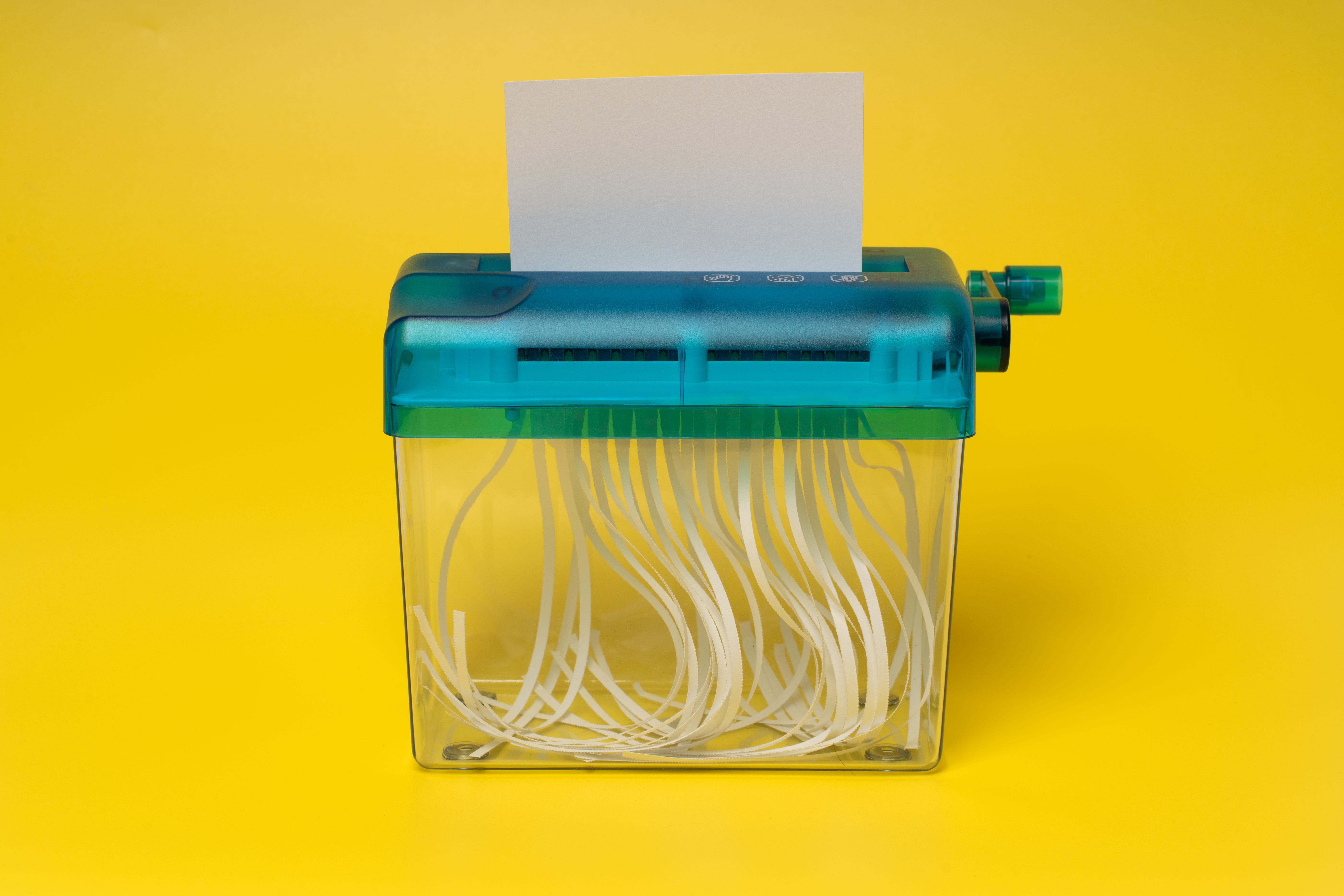
During his first term, President Trump routinely tore up official documents, forcing archivists to meticulously tape them together to comply with the Presidential Records Act. There were even reports that he clogged up toilets in the White House with shredded papers he hoped to disappear forever.
This time around, he’s taking a different approach. Instead of quietly defying the law, he ordered his advisors to dummy up an opinion saying that, actually, the PRA is unconstitutional. This requires a not inconsiderable amount of chutzpah, since the Supreme Court said almost 50 years ago that it is. And yesterday, Judge John Bates of the US District Court in DC said it again, in a meticulous opinion that opened with quotes from George Orwell and Shakespeare.
The injunction takes effect May 26th and covers White House staff, though not the president or vice president — which is a gap you could drive a very classified Signal chat through. The past is indeed prologue.
Personnel is policy
On April Fools’ Day the Office of Legal Counsel published a memo opining that “The Presidential Records Act is unconstitutional because it exceeds Congress’s enumerated and implied powers and aggrandizes the Legislative Branch at the expense of the constitutional independence and autonomy of the Executive.”
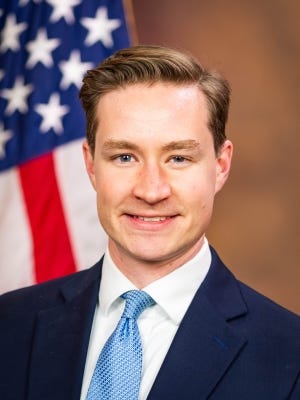
The memo’s author, a 36-year-old rightwing lawyer named T. Elliot Gaiser, was tapped to retcon a legal justification for the White House staff to keep on conducting business via disappearing messaging apps and personal emails. This task was somewhat difficult thanks to the Supreme Court, which upheld a materially identical statute in 1977 when Nixon sued the GSA to avoid having to turn over his tapes. But, as a former clerk for Justice Alito, Gaiser was up to the job. He simply declared that the Supreme Court was “wrong,” and “mistaken,” and “failed to appreciate the Article II consequences” of its own ruling.
He also made a tortured argument about Trump v. Mazars, the 2020 Supreme Court decision involving congressional subpoenas for Trump’s personal financial records. The Court held that subpoenas of the president must be related to a legitimate legislative purpose and narrowly tailored to avoid partisan harassment. Of course, presidential records are definitionally not personal records, and the PRA is a law, not a subpoena. But Gaiser had a job to do, so he shouted Mazars! 34 times and hoped for the best. And with all that shouting, he plum forgot to mention the Property Clause — Congress’s plenary power to regulate federal property — which the DOJ relied on in 1977 when it successfully defended the predecessor statute in Nixon v. GSA.
Hey, Susie Wiles! You up?
Gaiser’s memo was good enough for White House Counsel David Warrington, and the next day he fired off an all-staff memo announcing that the PRA was now unconstitutional. He suggested that White House employees “should” preserve their comms, which “may be relevant to ongoing or future litigation.”
As for text messages … ehhhhh:
Under the PRA, no presidential administration required EOP staff to transcribe phone calls, meetings, or informal discussions, even though the broad and unconstitutional text of the PRA certainly suggests that this would be required. Complying with such a requirement would be immensely time consuming and costly. Similarly, as text messaging becomes more akin to speaking every day, preserving all text messages would create an enormous technological burden while chilling the ability of presidential advisors to provide candid advice. Text messages should only be preserved when they are the sole record of official decision-making, government action, or contain unique information not available elsewhere. Furthermore, staff is encouraged to ensure that any decision-making, government action, or unique information is memorialized in a more accessible format, such as an email or memorandum. Text messages reflecting personal conversations, workplace gossip, ministerial tasks or other workplace minutiae (e.g., “call me”, “what room for the meeting”, “there is a typo in the first line of the memo”) do not need to be preserved.
Translation: Set all messages to self-destruct in seven days, Elliot says it’s cool.
Not so fast, fellas
On April 6th the American Historical Association and the watchdog group American Oversight (a frequent FOIA litigant) sued to block implementation of the OLC memo and force the National Archives to collect records in accordance with the PRA. Citing the administration’s flat refusal to stipulate to basic preservation measures while the case was pending, they moved for a preliminary injunction to prevent the permanent destruction of White House documents that belong to the American people.
The case was assigned to Judge John Bates, a George W. Bush appointee, who’s been on the bench long enough that he remembers when the White House Counsel and OLC at least pretended to be doing real law. He did not hide his disdain for a government that seeks to operate in secret.
“While the presidency is a singularly important institution, that gravity does not free it from modest constraint. Quite the opposite,” he wrote. “Each branch of government derives its authority from the trust placed in it by the People, and Congress has validly determined that this Act helps to maintain that trust by shining some light on the activities of the President and his aides.”
Warrington and Gaiser caught substantial judicial side-eye as well, as the court sniffed that “it is not for this Court, OLC, or the White House to second guess Congress’s lawful determination—made pursuant to at least two different enumerated powers—that citizens ought eventually to have access to these records of presidential activities carried out in their name.”
Madness lies
It’s worth pausing to note that the man who spent years braying that Hillary Clinton should go to email jail for using a private server is now arguing that his minions have a constitutional right to conduct government business on self-destructing messaging apps, and that any law requiring them to preserve those messages is an unconstitutional affront to executive power.
Anyway, here’s an official White House video congratulating Trump on “the most transparent administration in history.”
Irony is dead.
Remember when egg prices were the novelty? That was nice, I guess…
White House spokesperson Steven Cheung posted: “Do not ever doubt President Trump and his political power. F*ck around, find out.”