

One More Final Nail In The Coffin For US v. Comey
Deader than Monty Python's parrot?


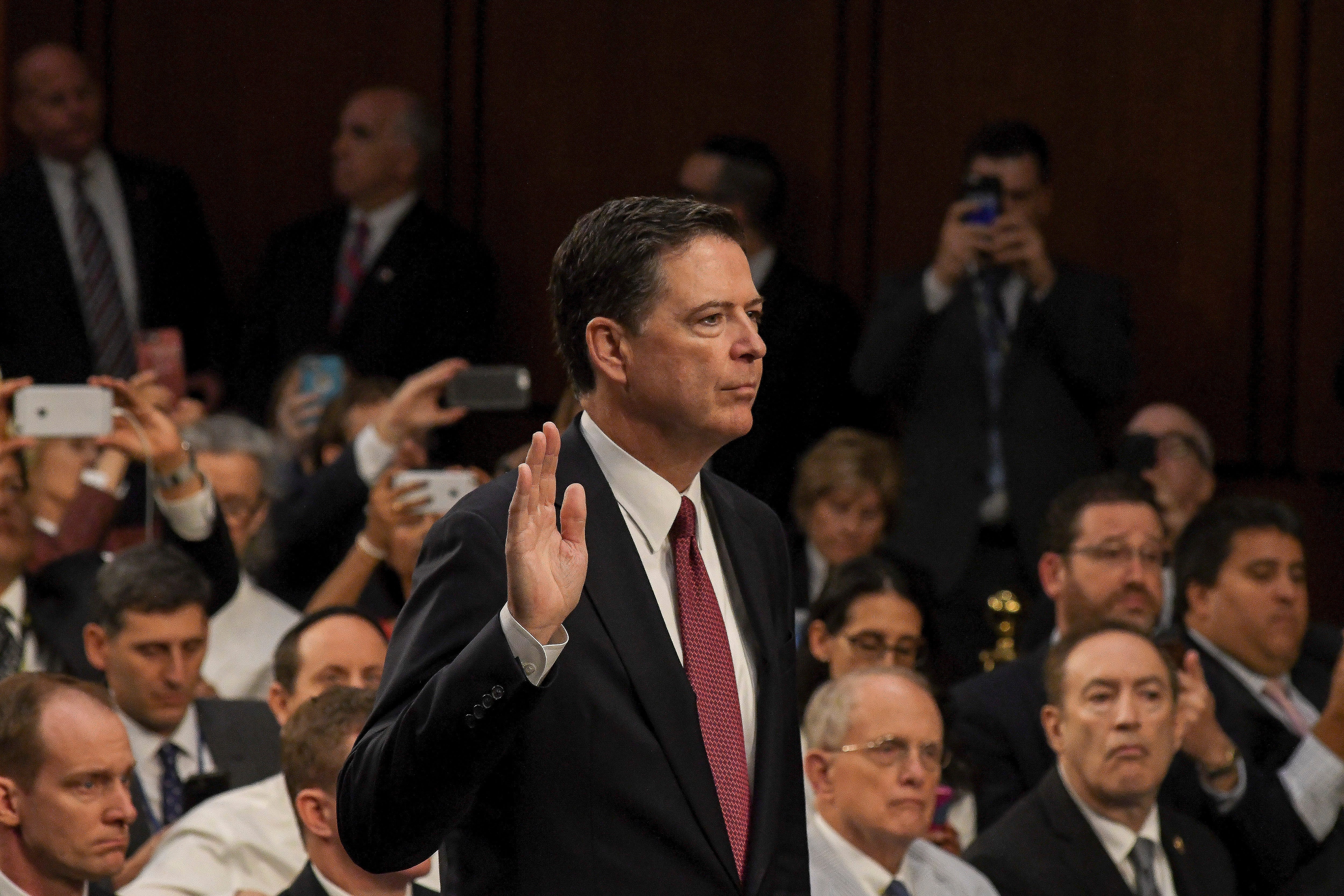
As of today, the Trump administration’s case against James Comey is dead. Judge Cameron Currie dismissed the charges because former White House aide Lindsey Halligan was illegally appointed as US Attorney for the Eastern District of Virginia. Trump’s Florida insurance lawyer had no more authority to present an indictment to a grand jury than a random person who wandered in off the street.
But the mad king demands a scalp, and so the DOJ is currently making noise about re-indicting Comey, as well as New York Attorney General Letitia James.
“Stay tuned for right after Thanksgiving and you’ll see multiple responses, in my opinion,” FBI Director Kash Patel vamped for the rightwing Epoch Times, a publication which used to employ him and which was implicated in a massive money laundering scheme.
But Daniel Richman, Comey’s friend and lawyer who played a key role in the indictment, just threw a giant spanner in the works. On November 26, he filed a motion to deprive the DOJ of most of the evidence Halligan relied on the first time around, arguing that it was illegally retained after the government seized it from him six years ago. And with no evidence, this case is probably gone for good.
No general warrants
One of the founding principles of our democracy is that the government can’t just take your stuff. Even if you’re the target of a criminal investigation, the Fourth Amendment protects you against “unreasonable searches and seizures” by requiring the government to get a warrant that describes the “things to be seized” with particularity. The FBI can’t just knock on your door and hand you a warrant that allows it to search for all evidence of crimes. And when the investigation is over, the government has to give back anything it took which was unresponsive to the warrant or otherwise privileged.
Sometimes the government doesn’t do that. So Rule 41(g) of the Federal Rules of Criminal Procedure provides that any “A person aggrieved by an unlawful search and seizure of property or by the deprivation of property may move for the property’s return.” And that’s exactly what Richman did.
The Richman warrants
In 2017, during Donald Trump’s first term, the DOJ investigated Comey for potentially leaking classified information to the New York Times via Richman. Dubbed “Arctic Haze,” the investigation resulted in four search warrants for Richman’s electronic files: two for the hard drive on his personal computer, one for his Apple iCloud account containing the data on his personal phone and iPad, and one for his Columbia University emails.
All four warrants specified that the government was only permitted to seize “information that constitutes evidence and or/instrumentalities” of two specific crimes: 18 U.S.C. § 641, which prohibits the theft of government property, and 18 U.S.C. § 793, the Espionage Act, which prohibits the unauthorized gathering and/or transmission of information relating to the national defense. And at least one of the warrants ordered the government to seal all non-responsive documents and “not further review the information absent an order of the Court.” (Although, as Magistrate Judge William Fitzpatrick noted in his order excoriating the government, that language is basically surplusage, because it would be obvious to any reasonable prosecutor that such conduct was required by the Fourth Amendment.)
But the government routinely falls short of its obligations — Rule 41(g) exists for a reason.
